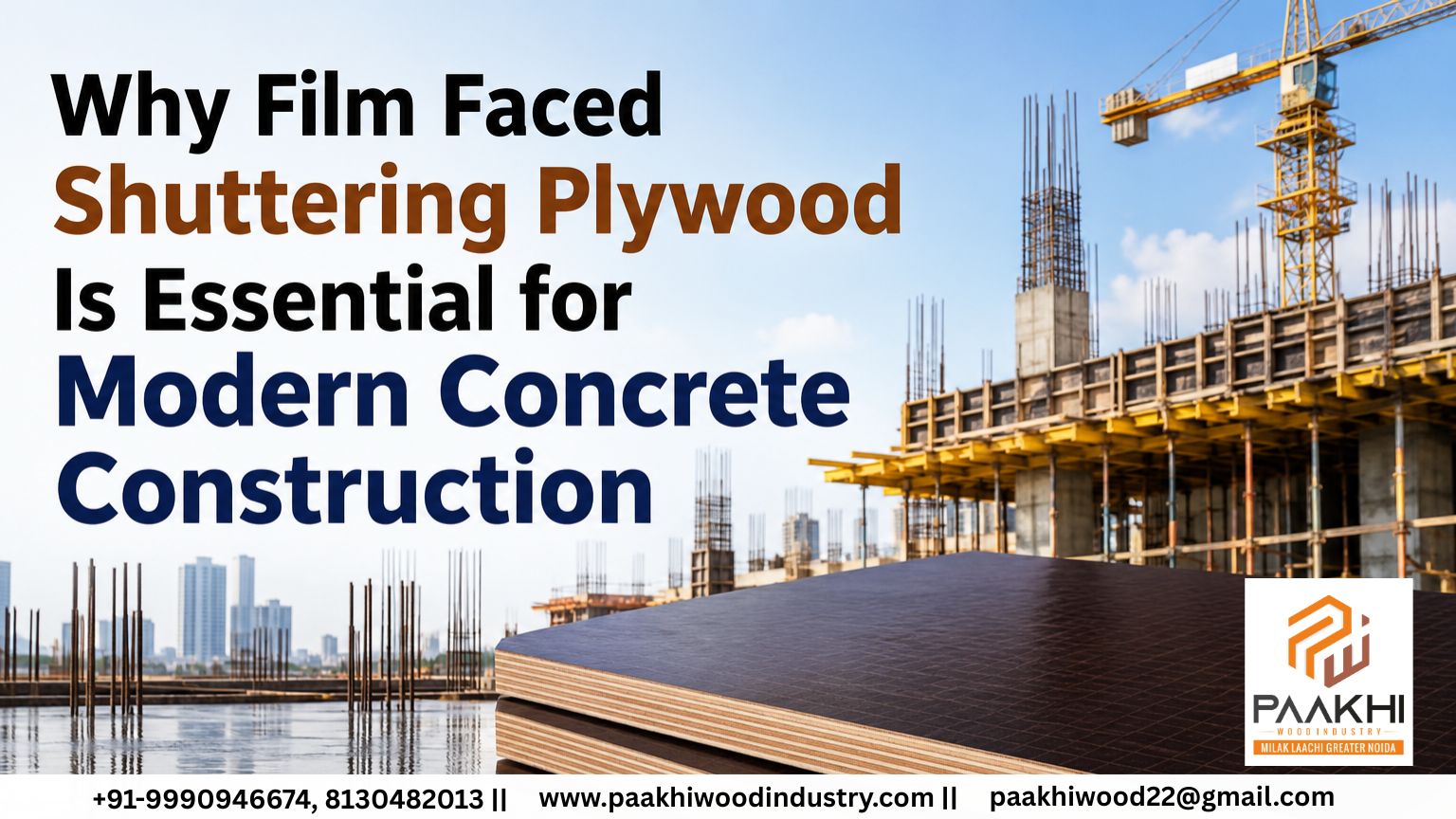
Concrete building requires accuracy, resilience and effectiveness. Whether it is a residential development, commercial buildings, bridge or infrastructure project, the quality of formwork is important for creating strong and polished concrete structures. Film faced shuttering plywood has become an essential material in modern construction projects.
We are recognized as a top option for builders, contractors and engineers, the Film Faced Shuttering Plywood Manufacturers like Paakhi Wood Industry consistently provide high quality plywood solutions that improves the construction standards and reduces the project expenses.
What is Film Faced Shuttering Plywood?
It is an engineered plywood panel that has a waterproof phenolic film applied to both sides. This protective layer improves the plywood ability to handle moisture, wear chemicals and handle severe weather conditions.
The even texture of the plywood enables concrete to set evenly, which results in superior finish with few surface defects. Due to its strength & durability, it has become a preferred option in the modern formwork systems.
Key Benefits of Film Faced Shuttering Plywood:
- High Strength & Load Bearing Ability:
Building projects frequently include heavy concrete weights. The Top 10 Film Faced Shuttering Plywood is designed from high-quality hardwood veneers and uses advanced bonding technology, ensuring remarkable strength and dimensional stability. This ensures reliable assistance during the pouring and curing of concrete.
- Enhanced Water Resistance:
A significant challenge in concrete construction is contact with water and dampness. The phenolic film layer stops water from entering which assists in preserving the plywood’s structural integrity even in challenging site conditions.
- Smooth Concrete FInish:
The quality of plywood surface directly affects the look of completed concrete structure as the film faced shuttering plywood delivers a smooth and even surface, which reduces the need for extra plastering or surface adjustments which saves time and labor expenses.
- Multiple Reusability:
Modern building firms focus on reducing expenses. Film faced shuttering plywood can be used repeatedly with minimal damage, thus Film Faced Shuttering Plywood Traders provides an affordable option for different projects needs.
Application of Shuttering Plywood in Modern Construction:
Film faced shuttering plywood is commonly used in different construction projects, which includes:
- Residential buildings
- Commercial complex
- Industrial structure
- Flyover and bridges
- Metro rail projects
- Infrastructure development
- High rise construction
Its adaptability and strength makes it ideal for tasks that demand reliable formwork efficiency and excellent concrete results.
Why Builders Prefer Film Faced Shuttering Plywood?
The leading Film Faced Shuttering Plywood Traders and manufacturers understand the growing need of the reliable construction material. The builder prefer this plywood because it offers:
- Excellent durability
- Reduced maintenance cost
- Faster construction cycle
- High resistance to moisture
- Long operational life
These benefits enhance the project efficiency and long lasting structural performance.
Best Film Faced Shuttering Plywood Traders/ Manufacturer – Paakhi Wood Industry:
Plywood used for film forming has become a crucial element in modern concrete construction because of its durability, water resistance, smooth surface and ability to be reused. With construction projects increasingly requiring enhanced efficiency and quality, selecting high quality products from experienced Film Faced Shuttering Plywood Manufacturers and trustworthy Film Faced Shuttering Plywood Traders can greatly enhance project results. Investing in Top 10 Film Faced Shuttering Plywood ensures long-lasting structures, reduces expenses and enhanced construction efficiency over time.