
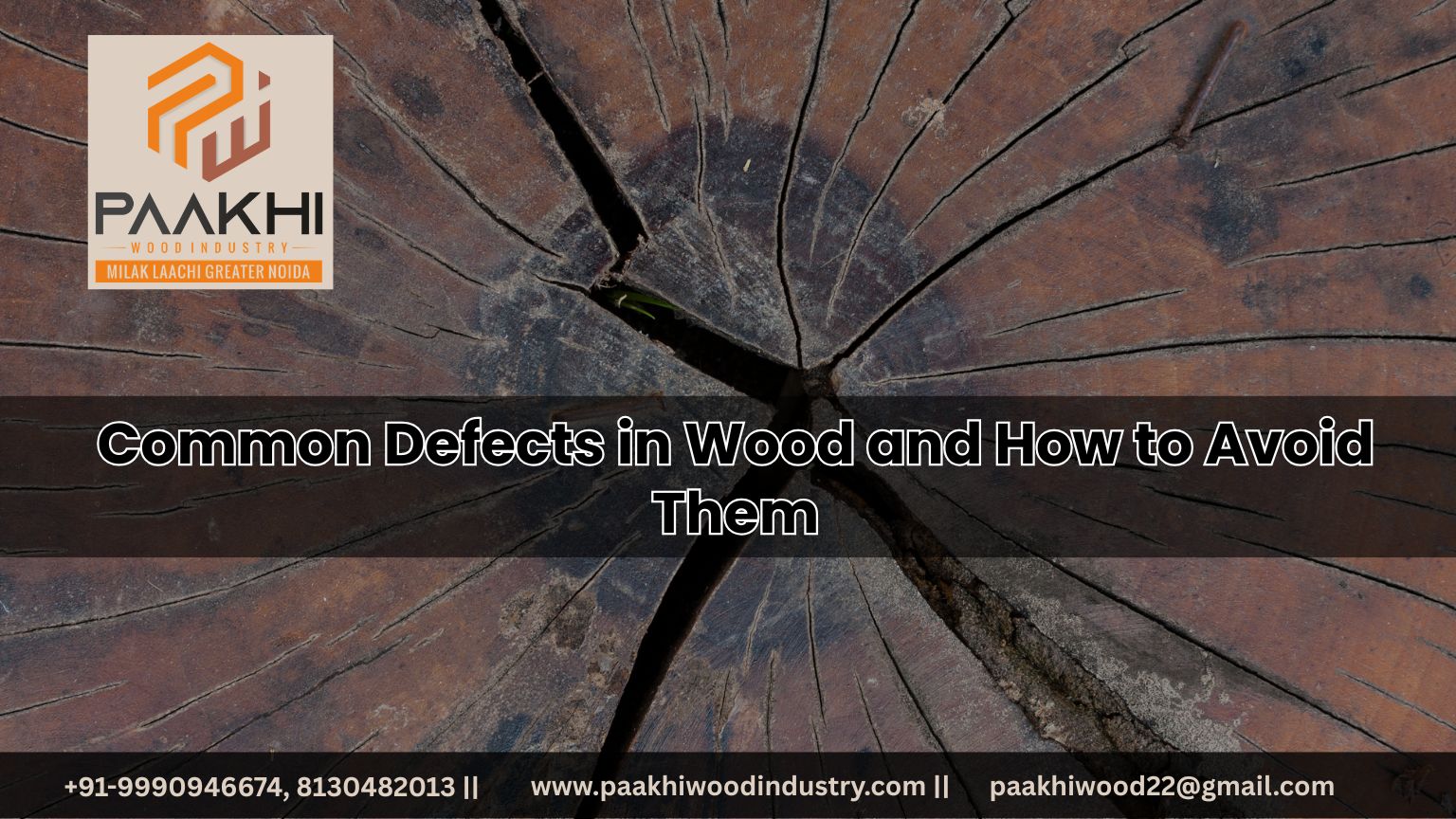
Wood is among the most adaptable and commonly used material in construction, furnishing and interior decoration. However, as a natural substances, it frequently possess inherent flaws that can impact its strength, durability & visual appearance. Understanding these common wood defects with Paakhi Wood Industry and learn how to prevent them can help in ensure high-quality results in your project.
What are Wood Defects?
Wood defects are natural imperfection and irregularities that occur naturally during a tree’s growth or during processing & storage. These defects can reduce the structural strength and visual appeal of the wood.
Common Defects in the Wood:
1. Knots:
Knots are among the most common defects in wood. They happen where branches used to connect with tree.
Impact:
- Weakens the wood structure
- Affects the smooth surface
How to Avoid:
- Select the premium woods with minimal knots
- Use manufactured wood such as plywood for consistency
2. Cracks & Splits:
Crack & split often arise from inadequate drying or abrupt fluctuation in temperature and humidity.
Impact:
- Decrease Power
- Reasons for damage in furniture
How to Avoid:
- Ensure proper seasoning & kiln drying
- Stored in regulated environment
3. Warping:
Warping describes the alteration of wood from its initial form, encompassing bowing, twisting or cupping.
Impact:
- Difficulty in installation
- Unsatisfactory completion outcomes
How to Avoid:
- Use well-seasoned wood
- Avoid exposure to moisture
- Use plywood or laminated panel for strength
4. Decay & Rot:
Fungal growth can result in wood weakness, particularly when wood remain damp for extended duration.
Impact:
- Reduces structural strength
- Leads to staining and harm
How to Avoid:
- Use preservatives and protective finishes
- Ensures wood remains dry & properly ventilated
- Use treated wood for outdoor use
5. Insect Damage:
Termites and various insects can really damage the wood by feeding on it.
Impact:
- Empty & fragile framework
- Reduced lifespan
How to Avoid:
- Use plywood or wood that is resistant to termite
- Implement anti-termite measure
- Regular inspection & maintenance
Tips To Choose Defect Free Woods:
- Consistently obtain wood from trustworthy vendors.
- Verify adequate seasoning and moisture levels.
- Check for apparent flaws prior to buying.
- Choose engineered wood materials for reliability and strength
Top Plywood Manufacturers/Suppliers in India:
Selecting premium wood materials is essential for preventing flaws and guaranteeing durability. The top manufacturers focuses on advanced processing methods, appropriate seasoning and strict quality inspections to provide flawless materials.
Paakhi Wood Industry distinguishes itself as one of the leading plywood manufacturers and suppliers in India by providing high-quality plywood and wood products that are long-lasting, resistant to termites, and designed for optimal performance. We are dedicated to quality and customer satisfaction, as we assure reliable solutions for all your construction and interior requirements.